Seated Leg Curl
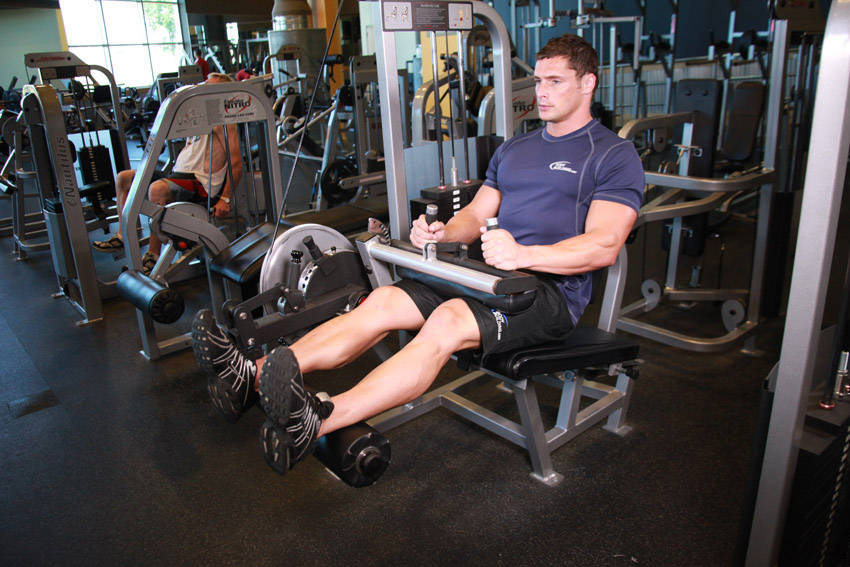
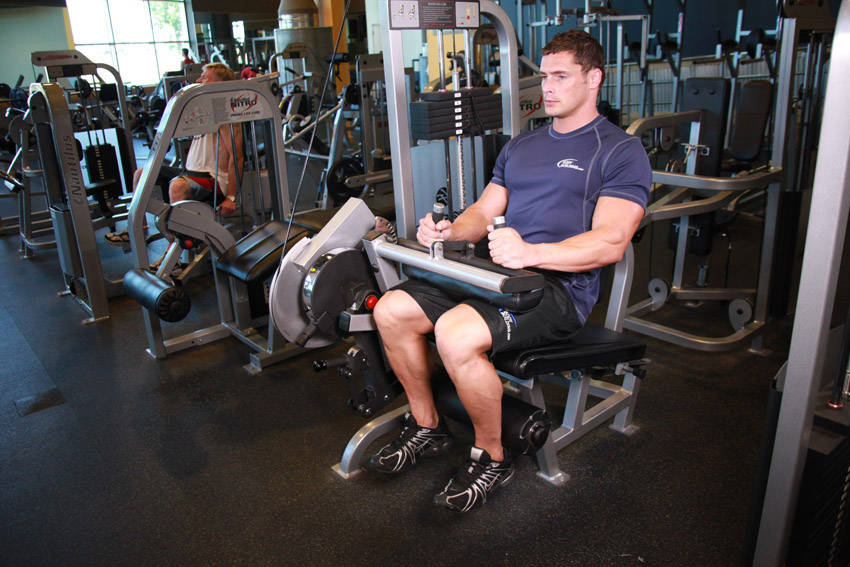
The seated leg curl is a machine exercise for your hamstrings. You sit upright with your legs out in front of you and pull a padded lever down and under your seat by bending your knees. Your hamstrings do almost all the work, with some help from your calves. It is an easy machine for beginners to learn, and it is a fixture in the leg days of anyone who wants stronger, fuller hamstrings without loading their back.
Your hamstrings do two jobs: they bend your knee and they extend your hip. Romanian deadlifts train the hip side, and a curl trains the knee side, so a complete leg program uses both. Sitting bends your hips, which keeps most of your hamstrings in a longer position than a lying curl does, so you tend to feel a stronger stretch. That is why many lifters prefer the seated machine when they have the choice. The lying curl and the seated curl are close cousins, though, so use whichever your gym has.
Muscles worked
- Hamstrings (primary)
Equipment
Machine
How to do it
- Adjust the back pad so your knees line up with the machine's pivot point. Your back and hips should sit firmly against the pad.
- Set the ankle pad so it rests just above your heels, on the back of your lower legs, with your legs close to straight.
- Lower the thigh pad until it holds your legs snugly just above your knees. Take hold of the side handles.
- Bend your knees to pull the pad down and back as far as you can without your hips lifting. Keep your torso still against the seat.
- Squeeze your hamstrings for a second at the end of the curl.
- Return slowly over two to three seconds until your legs are almost straight, staying in control so the stack does not slam down.
Common mistakes
- Skipping the setup. If your knees sit in front of or behind the pivot, the pad slides along your leg and the resistance feels wrong. Take a moment to line them up before your first set.
- Leaving the thigh pad loose. A loose pad lets your hips lift out of the seat. Tighten it enough to hold you in place without being uncomfortable.
- Rushing the way back. Letting the stack fall skips the slow lengthening that makes the exercise worthwhile. Count to two or three on each return.
- Cutting the curl short. Tiny reps with a heavy stack leave the strongest part of the movement untrained. Use a weight you can pull all the way through and hold for a second.
Variations
- Lying leg curl : Use it when your gym has no seated machine or you want a change of angle with your hips straighter.
- Single-leg seated curl : Work one leg at a time to even out strength between your sides.
- Standing leg curl : Pick it when you want single-leg work with a slightly different feel at the knee.
- Nordic hamstring curl : Choose it when you have no machine and already have a good base, since your own body weight makes it very demanding.
Sets and reps to start with
Do 3 to 4 sets of 8 to 15 reps with 60 to 90 seconds of rest, stopping a rep or so short of failure with a slow return on every rep. Beginners can start with 2 to 3 sets of 12 and a light pin setting while they learn the machine. For most people, once or twice a week works well alongside a hip hinge such as the Romanian deadlift, ideally early enough in the session that your hamstrings are still fresh. Use the same seat and pad settings each time, and write them down. Add a plate when every set reaches the top of your rep range with control on the way back.
Frequently asked questions
Is the seated leg curl better than the lying leg curl?
For many lifters the seated version is the first choice, because bending your hips keeps your hamstrings in a longer position. The lying curl still trains your hamstrings very well. Use the one that fits your body and gym, or rotate between them.
What muscles does the seated leg curl work?
It works your hamstrings, the muscles on the back of your thigh. Your calves help a little, since one of them crosses the back of your knee. Your glutes and quads do very little here.
Where should the pad be on a seated leg curl?
The ankle pad should sit just above your heels, on the back of your lower legs. If it is too high, you lose leverage and the machine feels awkward. The thigh pad belongs just above your knees and should hold you down without digging in.
Should you do leg curls before or after squats?
Either works, so it depends on your goal. If squats or deadlifts are your priority, do those first while you are fresh. If your hamstrings are lagging, doing leg curls first gives them your best effort.
See the 18 machines for this movement →
Similar exercises
Log your seated leg curl and see the weight to try at every workout. Free, no ads.