Back Squat
The back squat is a barbell lift where you rest the bar across your upper back, sit down between your legs until at least your thighs reach parallel, then stand back up. Your quads and glutes do the bulk of the work, your hamstrings and adductors help, and your back and abs hold your torso in place. It is a staple for almost any strength or muscle-building program, and it is learnable by beginners who start light.
Leg presses and hack squats can train your quads hard without much balance, but neither asks your whole body to work together under load the way a free squat does. The back squat lets you load heavily and add weight in small steps for years. It demands more mobility and more practice than a machine, and your torso can limit you before your legs do. If your goal is general strength, it is hard to beat, and if your goal is only quad size, it is one good option among several.
Muscles worked
- Quads (primary)
- Glutes
- Hamstrings
Equipment
Barbell
How to do it
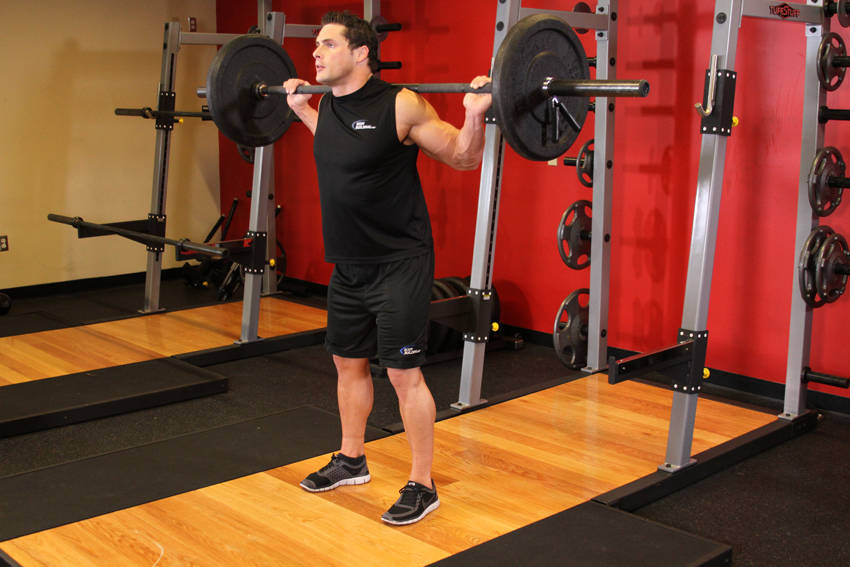
- Set the bar in a rack at about mid-chest height and set the safety pins just below your lowest squat position. Step under and place the bar on your upper traps, or lower across your rear delts if you squat low-bar.
- Grip the bar firmly, pull your elbows down, stand up to lift it from the hooks and take two or three short steps back.
- Set your feet about shoulder width apart with your toes turned out slightly. Your exact stance depends on your hips, so adjust until you can sit deep comfortably.
- Take a big breath into your belly and brace your abs hard, as if about to take a punch. Hold that pressure for the descent.
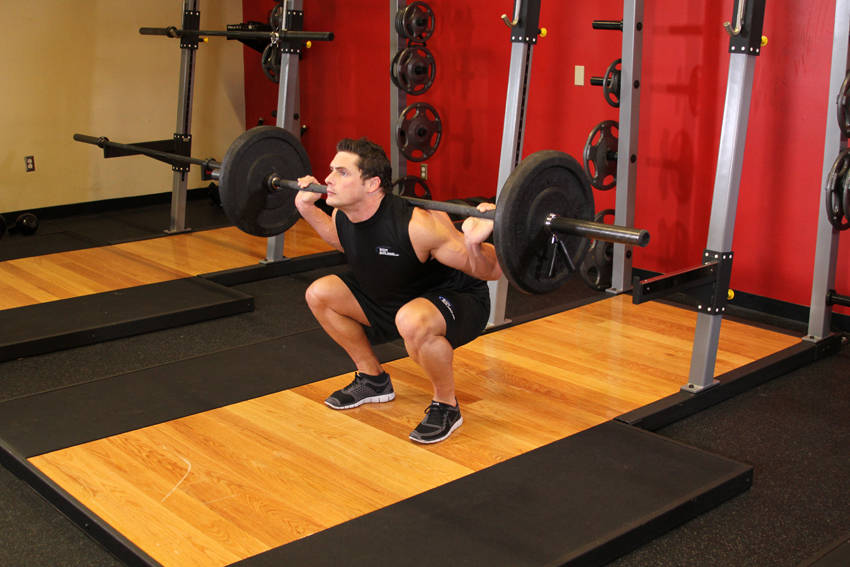
- Bend your hips and knees at the same time and sit down between your legs, keeping your knees in line with your toes and your whole foot on the floor.
- Descend under control until your thighs reach at least parallel to the floor, with your hip crease level with or below the top of your knee.
- Drive up by pushing your feet through the floor, keeping your chest and hips rising at the same rate. Breathe out near the top and stand tall.
Common mistakes
- Squatting too shallow. Stopping short of parallel reduces the work your glutes and quads get. Lower the load or use a box to learn your depth.
- Letting your knees cave in. Knees that collapse inward waste force. Think about spreading the floor apart with your feet, and take weight off if it keeps happening.
- Letting your heels lift. If your weight rolls onto your toes you lose balance and power. Keep pressure across your whole foot, and try a slightly wider stance or heeled shoes if ankle mobility is limiting you.
- Shooting your hips up first. When your hips rise faster than your chest, the lift turns into a good morning. Brace harder, and lead with your upper back out of the bottom.
- Losing your brace. Letting your breath out at the bottom softens your torso. Hold your air until you are past the hardest point, then exhale.
Variations
- Front squat : Hold the bar across your front delts when you want more quad focus and a more upright torso.
- Box squat : Sit to a box to learn consistent depth or build power from a dead stop.
- Goblet squat : Use a dumbbell or kettlebell at your chest to learn the pattern before you load a barbell.
- Smith machine squat : Choose it when you want to focus on your legs with less balance demand and a fixed bar path.
Sets and reps to start with
For strength, use 3 to 5 sets of 3 to 6 reps with 3 to 5 minutes of rest. For leg size, 3 to 4 sets of 6 to 12 reps with 2 to 3 minutes of rest works well. Beginners should learn the pattern with an empty bar or a goblet squat, then do 3 sets of 8 and add a small step each session, no more than about 10% of the bar (around 2 kg or 5 lb on an empty bar), while every rep stays solid. Squat once to three times a week, and keep one or two reps in reserve on most sets. Log your depth and how the reps felt as well as the weight, since a load that goes up while your depth goes down is not progress.
Frequently asked questions
How deep should you squat?
Aim for at least parallel, with your hip crease level with the top of your knee. Going deeper is fine if you can keep your position and control. Your hip structure and ankle mobility affect how deep you can comfortably go, so depth varies between people.
Is it OK if your knees go past your toes when squatting?
Yes, for most lifters that is a normal part of squatting. How far your knees travel depends on your limb lengths, ankle mobility and bar position. Focus on keeping your whole foot on the floor and your knees in line with your toes.
What is the difference between high-bar and low-bar squats?
A high-bar squat places the bar on your upper traps, keeps your torso more upright and tends to emphasize your quads. A low-bar squat sits lower on your rear delts, leans you forward and brings your hips and hamstrings in more. Many powerlifters use low-bar, while many bodybuilders and weightlifters prefer high-bar.
Should you wear a belt for squats?
You do not need one to start. A belt gives your abs something to brace against and can help on heavy sets, but it does not replace learning to brace without it. Most lifters save it for their heavier working sets.
Why do my heels come up when I squat?
It often means your ankles are tight or your weight is too far forward. Try turning your toes out a bit more, widening your stance or using squat shoes with a raised heel. Reducing the load while you practice also helps you stay balanced.
Similar exercises
Log your back squat and see the weight to try at every workout. Free, no ads.