Leg Extension
The leg extension is a machine exercise that isolates your quads. You sit with a pad on your lower shins and straighten your knees to lift it, then lower it back down. Nothing else does much work, as your hips stay still and your glutes and hamstrings are out of the picture. It is an easy way for beginners to get a feel for their quads, and a popular finisher for lifters focused on muscle size.
Squats and leg presses train your quads alongside your glutes, and your hips, back or balance can limit you. The leg extension takes all of that away, so your quads can reach fatigue on their own. It also trains the rectus femoris, the quad muscle that crosses the hip, in a way squats do not train it as much. What you do not get is the total-body strength of a compound lift, so it works best as an extra, not as your only leg exercise.
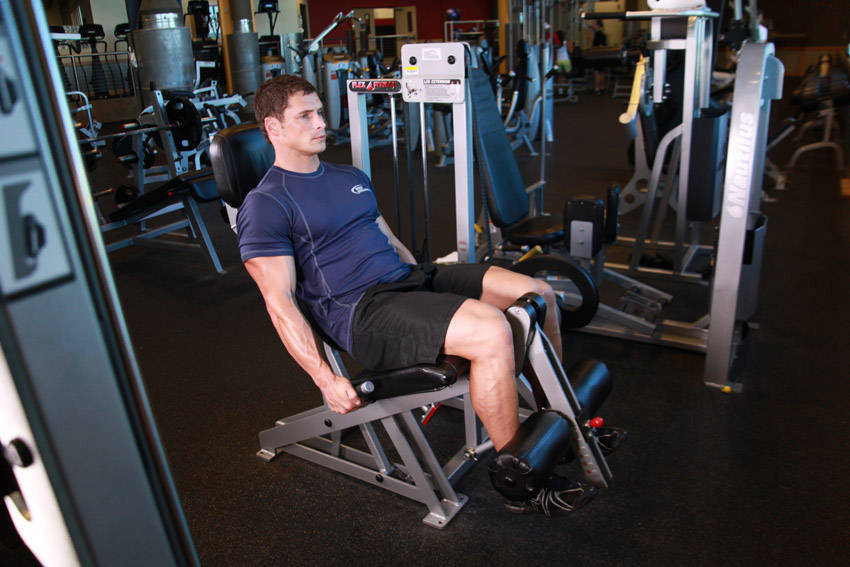
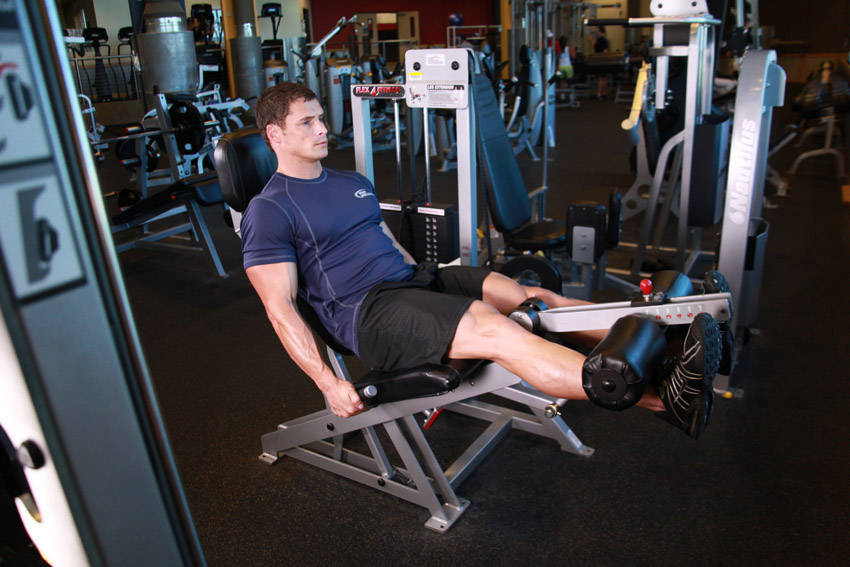
Muscles worked
- Quads (primary)
Equipment
Machine
How to do it
- Adjust the back pad so your knees line up with the machine's pivot point, and your back sits flat against the seat.
- Set the shin pad so it rests on your lower shins, just above your ankles. Your knees should be comfortably bent at the start.
- Hold the side handles to keep your hips in the seat. Choose a load you can lift with no jerking.
- Straighten your knees smoothly to lift the pad, keeping your feet in the same position and your thighs flat on the seat.
- Finish with your legs nearly or fully straight and squeeze your quads for one second at the top.
- Lower the pad slowly over two to three seconds until your knees are bent again, stopping before the plates touch.
Common mistakes
- Kicking the weight up. Using momentum takes load off your quads. Lift smoothly, with a one-second squeeze at the top, and use a lighter stack if you cannot pause.
- Getting the pivot wrong. If your knees are not lined up with the machine's pivot, the pad slides along your shin and the movement feels awkward. Move the back pad until your knees sit in line.
- Lifting your hips off the seat. Rising up shortens the movement and lets you cheat. Hold the handles firmly, and lower the weight if your hips still lift.
- Dropping the stack. Letting the pad fall skips the lowering work your quads need. Count to two or three on every rep.
Variations
- Single-leg extension : Work one leg at a time when you want to even out strength between your sides.
- Paused leg extension : Hold the top position for two or three seconds if you want more from a lighter load.
- Sissy squat : Try it when you have no machine and you have the balance and strength for a demanding bodyweight option.
Sets and reps to start with
Use the leg extension after your main leg lifts, or as a first exercise to warm up your knees and quads. Do 3 to 4 sets of 10 to 15 reps with 60 to 90 seconds of rest and a one-second squeeze at the top. Going close to failure is fine here, since the machine is stable. Beginners can start with 2 to 3 sets of 12 to 15 at a light load. Once or twice a week fits most programs. Move up slowly, in the smallest step the stack allows, and only after all your sets reach the top of your range with a controlled descent.
Frequently asked questions
What muscles do leg extensions work?
They work your quads, the four muscles on the front of your thigh. That includes the rectus femoris, which also crosses your hip. Almost nothing else is involved, which is why the machine is called an isolation exercise.
Are leg extensions bad for your knees?
Many lifters use them with no problem when they control the load and set the machine up to fit. Start light, use a smooth tempo and adjust the range to one that feels comfortable. If you feel knee pain, stop and see a professional.
Should you do leg extensions before or after squats?
After squats is the most common choice, so your quads are fresh for the heavier lift. Some lifters do a few light sets first as a warm-up. If squats are not part of your program, you can place them wherever your quads will get the most focus.
Can leg extensions replace squats?
No, they train a different kind of movement. Squats work your glutes, hamstrings and core too, and they build strength you can use outside the gym. Leg extensions are a useful addition for extra quad work.
Should you point your toes on leg extensions?
Keep your feet in a natural, neutral position with your toes pointing up. Small turns in or out make little practical difference, so there is no need to force them. Pick a position that feels comfortable and keep it the same for every rep.
See the 18 machines for this movement →
Similar exercises
Log your leg extension and see the weight to try at every workout. Free, no ads.