Seated Cable Row
The seated cable row is a horizontal pull done from a low pulley, usually with a V-bar handle. It trains your lats and the mid-back muscles between your shoulder blades, mainly the rhomboids and middle traps, with your biceps and rear delts helping. Your lower back works too, holding your torso steady. It suits almost anyone who wants a thicker back, from a first-week beginner to an experienced lifter chasing extra volume.
Compared with a barbell row, you sit braced against a foot plate, so your lower back does far less work to hold a hinged position and you can spend your effort on the pull itself. The cable also keeps a steady load through the whole rep, including the stretch at the front, and changing the handle takes seconds. The trade-off is that it is easy to turn the movement into a rocking contest, so the load has to stay honest.
Muscles worked
- Lats (primary)
- Rhomboids
Equipment
Cables, Machine
How to do it
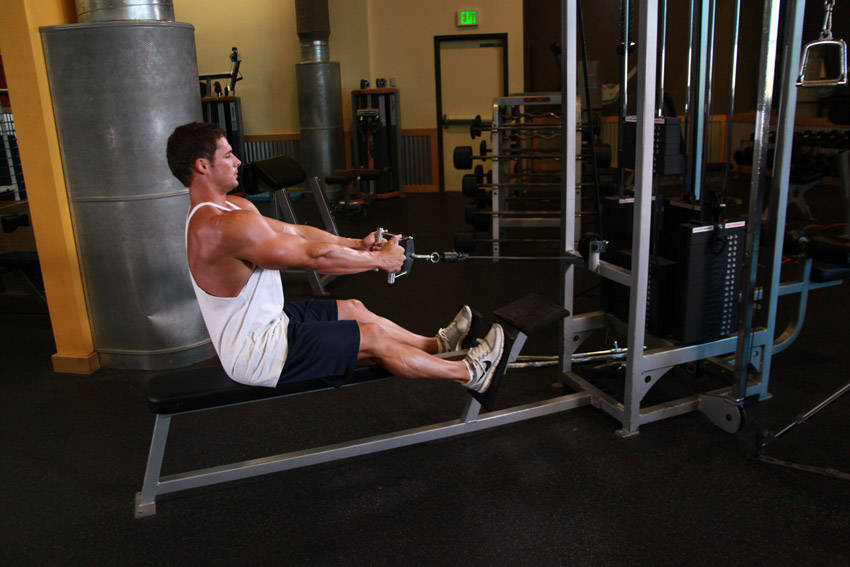
- Sit on the bench, put your feet on the platform and keep a soft bend in your knees. Attach a V-bar, or a wide bar if you want more upper back.
- Reach forward with a straight back, take the handle, then push with your legs until you sit tall with your torso roughly upright and your arms long.
- Let your shoulder blades slide forward a little so you feel a stretch across your back. Brace your abs and keep your chest up.
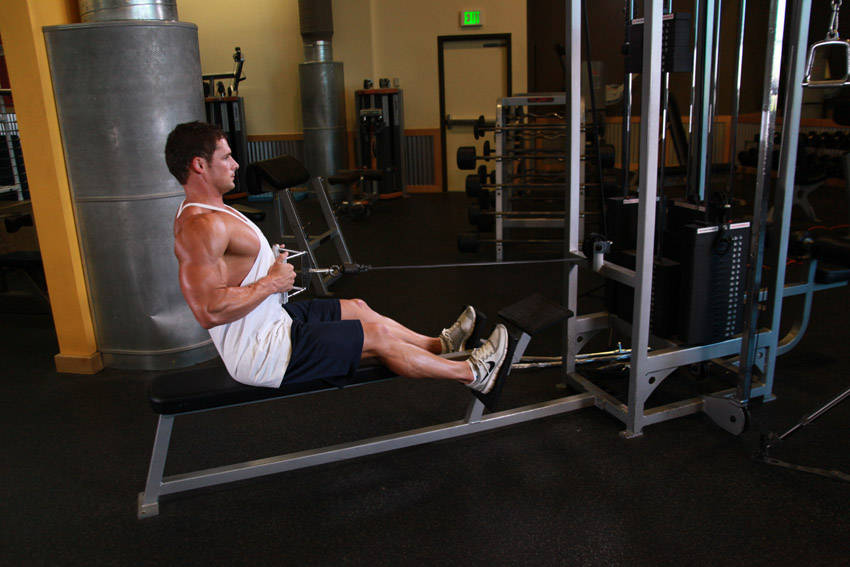
- Start the pull by drawing your shoulders back, then bend your elbows and drive them behind your body, keeping them close to your ribs with a V-bar.
- Bring the handle to your lower ribs or upper stomach. Pause for a moment with your shoulder blades pulled together and your shoulders away from your ears.
- Straighten your arms slowly and let your shoulder blades move forward again before you start the next rep. Your torso should move very little from start to finish.
Common mistakes
- Rocking back and forth. If your torso swings through a big arc, your hips are moving the weight. Drop the load until you can hold your torso almost still and pause at the end of each pull.
- Rounding forward at the stretch. A small forward lean is fine, but folding over the handle with a collapsed back is not. Reach with your shoulder blades and keep your chest up.
- Shrugging the handle. When your shoulders creep toward your ears, your upper traps take over. Think about pulling your elbows back and down toward your hips.
- Pulling only with your arms. If your biceps tire long before your back, move your shoulder blades first and treat your hands as hooks. A thumbless grip or lifting straps can help you stop squeezing so hard.
Variations
- Wide-grip seated cable row : Use a long bar and let your elbows flare out when you want to bias your upper back and rear delts more than your lats.
- Single-arm seated cable row : Pick it if one side lags, or if you want a longer reach and a little torso rotation at the stretch.
- Machine row : A chest pad removes the need to stabilize your torso, which makes it a good choice late in a session or when your lower back is already tired.
Sets and reps to start with
For back size, do 3 to 4 sets of 8 to 12 reps with about 90 seconds of rest and finish each set with one or two good reps left. If strength is the aim, 4 sets of 6 to 8 reps works well, as long as the pause at your stomach survives. Beginners should start with 3 sets of 10 to 12 at a load that allows a clean pause on every rep. Row once or twice a week, and pair it with a vertical pull such as the lat pulldown. Add weight only when every rep of every set reaches the top of your range without rocking.
Frequently asked questions
What muscles does the seated cable row work?
It mainly trains your lats, rhomboids and middle traps. Your biceps, rear delts and forearms assist, and your lower back holds your torso in place. Handle choice changes the balance: a close grip with tucked elbows favors the lats, while a wide grip with flared elbows favors the upper back.
Should you lean back on a seated cable row?
Only slightly, if at all. Finish with your torso upright or a touch behind vertical, then hold it there. A deliberate lean of a few degrees on heavy sets is common, but a large swing means your hips and momentum are moving the weight instead of your back.
Which handle is best for the seated cable row?
The V-bar is the standard choice because the neutral grip is comfortable and lets you pull your elbows close to your body. A wide bar shifts more work to the upper back and rear delts. Neither is better overall, so pick by what you want to train, or rotate them across training blocks.
Why do I feel seated cable rows in my biceps and not my back?
You are probably bending your elbows before your shoulder blades move. Start each rep by pulling your shoulders back, then let the elbows follow, and reduce the load so you can pause at the end. Your biceps will always help on a row, but your back should be the part that fatigues first.
Similar exercises
Log your seated cable row and see the weight to try at every workout. Free, no ads.