Deadlift
The deadlift is the simplest test of full-body strength: you pick a loaded barbell up from the floor and stand tall with it. Your lower back holds your spine in position while your glutes and hamstrings drive your hips forward, and your quads push the floor away at the start. Your lats, traps and grip all work hard too. It suits anyone who wants a stronger back and posterior chain, and beginners can learn it safely with light loads.
No other barbell lift lets most people handle as much weight, and few train so much muscle at once. Unlike a squat, nothing sits on your shoulders, and each rep starts from a dead stop, so you cannot use a stretch at the bottom to help. That makes it demanding to recover from, so it needs less volume than other lifts. If the conventional version does not fit your build, the sumo and trap bar options are worth a try.
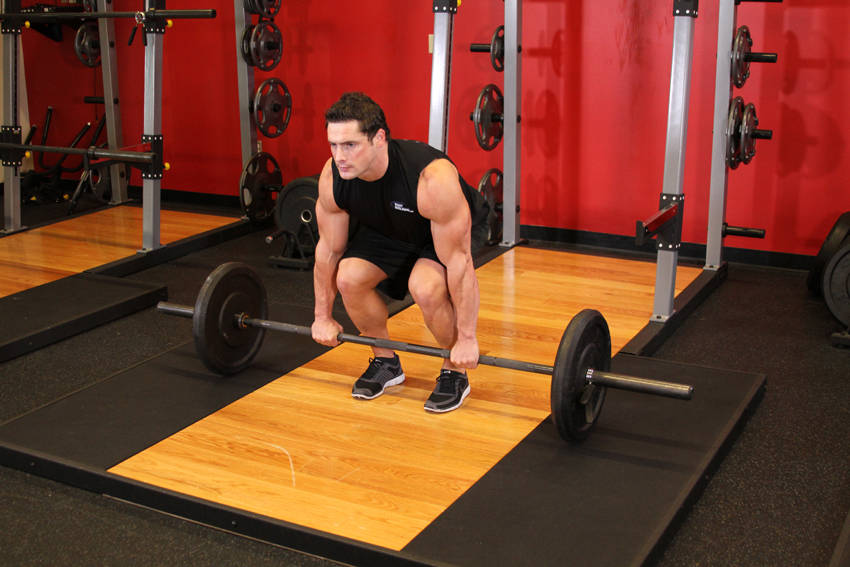
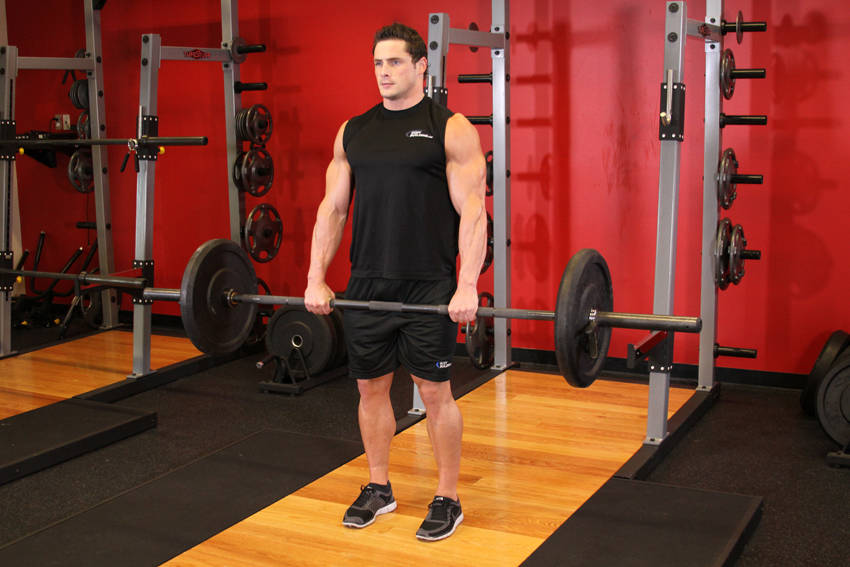
Muscles worked
- Lower back (primary)
- Glutes
- Hamstrings
Equipment
Barbell
How to do it
- Walk up to the bar until it sits over the middle of your foot, about an inch or so from your shins. Stand with your feet about hip width apart and your toes turned out slightly.
- Push your hips back and bend down to take the bar with both hands, just outside your legs. Use a double overhand grip for as long as you can hold on.
- Bend your knees until your shins lightly touch the bar. Keep the bar over mid-foot, and do not roll it toward you.
- Lift your chest and flatten your back, then pull your shoulders down as if squeezing oranges in your armpits. Take a deep breath and brace your abs.
- Pull the slack out of the bar until you hear it click against the plates, then push the floor away with your legs. Your hips and shoulders should rise at the same rate.
- Keep the bar dragging close to your legs. Once it passes your knees, drive your hips forward and finish standing tall, with no lean back.
- Push your hips back first, then bend your knees when the bar passes them, and lower it to the floor under control. Reset your position before the next rep.
Common mistakes
- Letting the bar drift forward. A bar away from your body is harder to lift and pulls you onto your toes. Keep it touching your shins and thighs the whole way up.
- Rounding your back. If your lower back rounds as the bar leaves the floor, the load is too heavy or your brace is too soft. Reduce the weight, set your lats and try again.
- Squatting the deadlift. Hips set too low will shoot up the moment the bar loads. Find your start position by bringing your shins to the bar, then raising your chest, and do not sink further.
- Jerking the bar off the floor. Yanking it loses your position before the rep starts. Take the slack out first, then build the force smoothly.
- Leaning back at the top. Overextending your spine adds nothing to the lift. Stop when your hips and knees are straight and your glutes are tight.
Variations
- Sumo deadlift : Use a wide stance with your hands inside your legs if you have long legs or if you prefer a more upright torso.
- Trap bar deadlift : Stand inside a hex bar when you want an easier pattern to learn with more work for your quads.
- Romanian deadlift : Start from the top and hinge only to mid-shin when you want more hamstring work and less floor fatigue.
- Rack pull : Start from pins above your knees to train the top of the lift or to give your legs a break.
Sets and reps to start with
Deadlifts need fewer sets than most lifts. For strength, do 3 to 5 sets of 3 to 5 reps with 3 to 5 minutes of rest. For muscle and general fitness, 3 sets of 5 to 8 reps work well. Beginners should start with 3 sets of 5 on a light bar, with 20 kg (45 lb) plates or bumper plates to keep it at the right height, and add 2.5 to 5 kg (5 to 10 lb) per session while their back stays flat. Once a week suits most people, and twice can work with one lighter day. Put it first in your session and keep a rep or two in reserve. Track your load in PrimeFeat or a notebook so you can see when to add weight and when to take a lighter week.
Frequently asked questions
What muscles does the deadlift work?
It works your lower back, glutes and hamstrings the most. Your quads help at the start, and your lats, traps, forearms and abs all work to hold the bar and your position. Few lifts train as much of your body at once.
Should you deadlift on back day or leg day?
Either is fine, as it trains both. Put it wherever it fits your schedule, and avoid doing heavy squats and heavy deadlifts in the same session if recovery is a problem. Many lifters give it its own day or place it first on a lower body or pull day.
Is a mixed grip safe for deadlifts?
Many strong lifters use it, but it is not the only choice. A mixed grip stops the bar from rolling out of your hands, and it puts your arms under uneven load, so swap which hand faces forward between sets. Double overhand, hook grip or lifting straps are good alternatives.
Why do I feel deadlifts in my lower back?
Your lower back works hard to hold your spine still, so some muscle fatigue there is expected. If it feels like your back is doing the lift rather than your legs, the bar may be too far forward or your hips too high. If you feel pain, stop and see a professional.
How often should you deadlift?
Once a week is enough for most people, especially on heavier loads. Beginners with light weights can pull twice a week to practice. Reduce frequency if your lifts feel slower or your grip and back never feel recovered.
Similar exercises
Log your deadlift and see the weight to try at every workout. Free, no ads.