Barbell Bench Press
The barbell bench press is the classic upper body strength lift. You lie on a flat bench, lower a bar to your chest and press it back up. Your chest is the main driver, your triceps straighten your elbows and your front delts help at the shoulder. It belongs in most programs, whether you are a beginner learning to press, someone chasing a bigger chest, or a powerlifter training for a max.
Few exercises let you load your upper body this heavily, and the bar makes progress easy to measure in small steps. Dumbbells give you more freedom and a slightly bigger stretch, and machines are simpler to push hard on, but the bench press beats both for building raw pressing strength. Its downside is that the bar sits above your chest and neck. Good setup and a safe way to bail out are part of learning the lift, not optional extras.
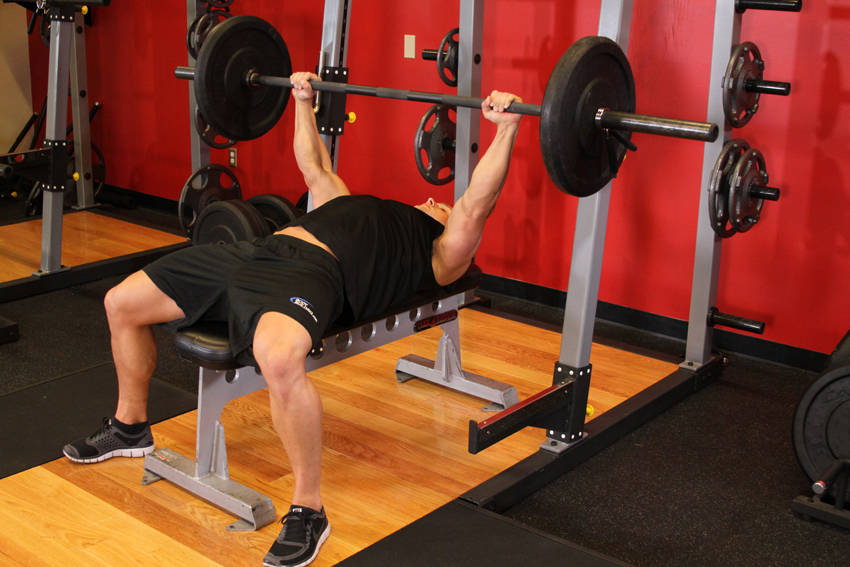
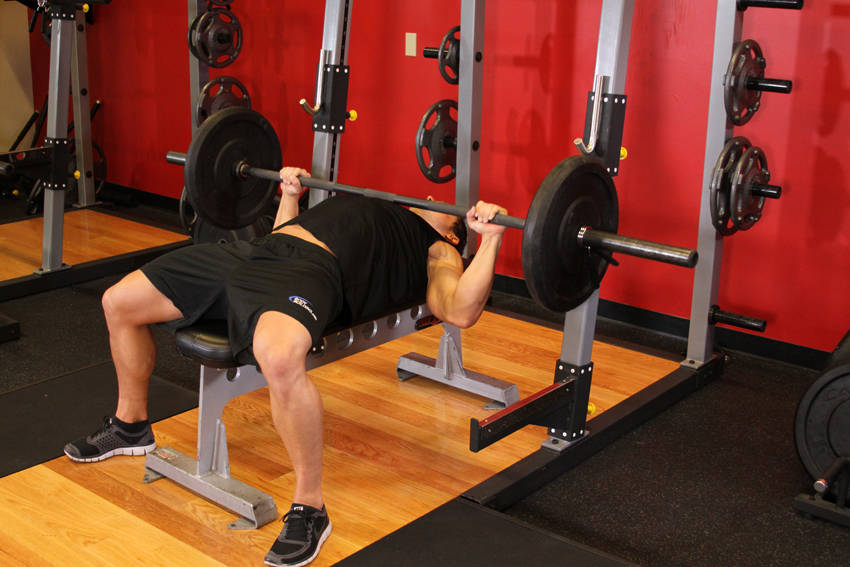
Muscles worked
- Mid chest (primary)
- Triceps
- Front deltoid
Equipment
Barbell
How to do it
- Lie on the bench with your eyes under the bar and your feet flat on the floor. Set the rack safeties, or have a spotter ready, before you add serious weight.
- Grip the bar a little wider than your shoulders with your thumbs wrapped around it. Keep the bar low in your palm, over your wrist and forearm.
- Pull your shoulder blades back and down into the bench. Keep your glutes on the bench and let a small natural arch form in your upper back.
- Take a deep breath, brace your abs and lift the bar out of the rack with straight arms until it sits over your shoulders.
- Lower the bar under control to your lower chest, around the nipple line, keeping your forearms vertical and your elbows angled toward your ribs rather than flared straight out.
- Touch your chest lightly without bouncing, then press up and slightly back toward your shoulders, pushing your feet into the floor.
- Finish with straight arms over your shoulders. Breathe out, reset and repeat, then guide the bar back into the rack after your last rep.
Common mistakes
- Benching without a safety plan. A failed rep with no help can pin the bar on your chest. Use safeties, a spotter, or leave plenty of reps in reserve, and avoid a thumbless grip.
- Flaring your elbows. Elbows held straight out at shoulder height make it harder to press well. Tuck them to a moderate angle so the bar stays over your wrists.
- Bouncing off your chest. Using your ribs as a trampoline takes tension off your muscles and makes reps inconsistent. Lower with control and touch softly.
- Letting your shoulders roll forward. Losing your shoulder blade position at the top makes the bar feel unstable. Stay pulled back and press yourself into the bench.
- Lifting your hips. Your glutes should stay on the bench, or the lift changes and a competition rep will not count. Drive your feet into the floor with your hips down.
Variations
- Dumbbell bench press : Use it when you train alone, want each arm to work evenly or prefer a freer path.
- Close-grip bench press : Bring your hands in to around shoulder width when you want more triceps work.
- Incline bench press : Raise the bench when you want more emphasis on your upper chest.
- Smith machine bench press : Try it when you want a fixed path and built-in safety hooks and do not need the balance challenge.
Sets and reps to start with
For strength, do 3 to 5 sets of 3 to 6 reps with 2 to 4 minutes of rest. For muscle growth, 3 to 4 sets of 6 to 12 reps with about 2 minutes of rest works well. Beginners can start with 3 sets of 8 to 10 on the empty 20 kg (45 lb) bar, or a lighter one, then add 1 to 2.5 kg (2.5 to 5 lb) when every rep looks the same as the first. Bench one to three times a week depending on your program, and leave a rep or two in reserve on most sets. Save true max attempts for days with a spotter or safeties in place.
Frequently asked questions
Where should the bar touch your chest when benching?
Around your lower chest, near the nipple line, is the usual spot. The right place is where your forearms are close to vertical at the bottom of the rep. Longer arms and a wider grip can shift this point slightly.
How wide should your grip be on the bench press?
A little wider than your shoulders suits most lifters. At the bottom of the rep, your forearms should be close to vertical when viewed from the front. Going much wider shortens the range but changes how your shoulders work, while a narrower grip shifts more work to your triceps.
Is it OK to arch your back on the bench press?
A moderate arch is normal and helps you keep your shoulder blades pulled back. The arch should come mostly from your upper back, with your glutes on the bench. Powerlifters use bigger arches to shorten the bar path, but you do not need one to train well.
How much should I be able to bench press?
There is no single right number, because it depends on your body weight, training age, sex and arm length. The more useful target is beating your own past numbers with good form. If you want a comparison, look at what lifters of your size and experience level do, and treat that as a rough guide.
Is the bench press enough for chest growth?
It can take you a long way, particularly as a beginner. Many lifters add an incline press and a fly to train the chest from more angles and with a deeper stretch. Consistent hard sets matter more than the exact exercise list.
Similar exercises
Log your barbell bench press and see the weight to try at every workout. Free, no ads.